
Why Do So Many People Crave Sugar After Quitting Alcohol?
 19th June 2025
 N/A
N/A

If you’ve recently stopped drinking and noticed a bit of an uptick in your sweet tooth cravings, you’re not alone. Craving sugar after quitting alcohol is a common experience for many people in recovery, often catching them off guard. But why does it happen and (more importantly) what can you do about it?
In this article, we’ll explore the connection between alcohol and sugar cravings, from hormonal and psychological changes to nutritional imbalances, and share tips on how to manage those urges healthily.
Why Do So Many People Crave Sugar After Quitting Alcohol?
When someone stops drinking, especially if they’re in recovery from alcohol addiction, their body undergoes significant physiological and biochemical changes. Alcohol is not only high in sugar and carbohydrates but also influences the brain’s reward system. So, once alcohol is removed, the body often seeks a substitute source of those missing ‘rewards’, which results in sugar cravings.
The Key Hormonal Changes
- Dopamine disruption: Alcohol stimulates dopamine, the brain’s ‘feel-good’ chemical. Without it, sugar can become a quick alternative to restore that dopamine hit.
- Blood sugar imbalances: Alcohol impacts blood glucose levels. Quitting can leave you
- Cortisol and stress: Alcohol acts as a sedative for many. Once it’s gone, the stress hormone cortisol may increase, leading you to seek sugary comfort foods.
- Serotonin shifts: Alcohol affects serotonin, another mood-regulating hormone. Sugar can provide a temporary serotonin boost, which may explain the cravings.
These hormonal fluctuations are only part of the story. Psychological factors and nutritional deficits also play a substantial role.
Psychological Drivers of Sugar Cravings in Sobriety
Our minds often seek replacement habits when breaking away from an addictive pattern. Another prime example of this is when someone quits smoking, it’s common to experience an increase in hunger. So, when we quit drinking and find ourselves craving something sweet, this makes sugar an attractive alternative, because it’s accessible, socially acceptable, and provides a sense of comfort.
Common psychological triggers include:
- Habit swapping: Swapping alcohol for sugar can feel like a reward or comfort ritual.
- Emotional eating: During recovery, emotions can run high. Food, especially sweets, often becomes a coping mechanism.
- Mental fatigue: The emotional toll of staying sober can increase susceptibility to cravings, as the brain seeks ways to self-soothe.
Alcohol Withdrawal and Increased Sugar Intake
Alcohol withdrawal has a profound effect on both the body and the mind, which can manifest in increased sugar cravings.
Withdrawal symptoms from alcohol addiction can be an uncomfortable experience, often involving mood swings, anxiety, and depression, all of which can lead to an increased desire for sugary foods as a form of self-medication. The physical symptoms of withdrawal, such as fatigue and headaches, can also prompt individuals to consume more sugar for quick energy and relief.
Nutritional Deficiencies in Recovery
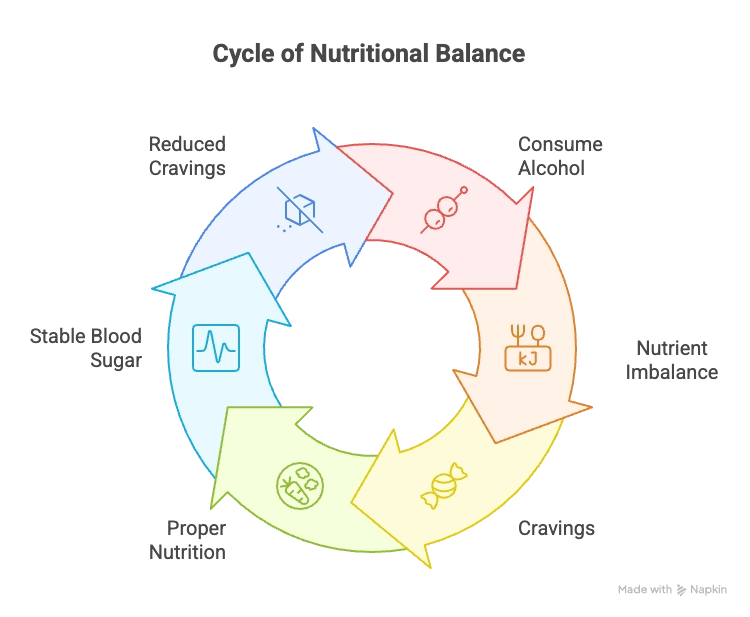
Chronic alcohol consumption can deplete your body of essential nutrients, such as magnesium, zinc, and B vitamins. These deficiencies can increase cravings for certain food types, sugar included.
- Alcohol is high in empty calories but low in nutrients.
- Recovery prompts your body to restore its nutrient balance, which may manifest as cravings.
- Proper nutrition supports stable blood sugar levels, reducing the urge for sweet snacks.
How to Curb Sugar Cravings After Quitting Alcohol
Managing sugar cravings during alcohol recovery and ensuring that overall health and well-being are a priority is incredibly important. See below for some useful tips on how to manage sugar cravings after quitting alcohol.
Eat a Balanced Diet to Regulate Blood Sugar and Cravings
When you quit alcohol, your body often looks for other ways to produce dopamine, the feel-good chemical that alcohol once helped release. Sugar becomes an easy substitute. However, consistently reaching for sugary foods can lead to unstable blood sugar levels, causing energy crashes and mood swings, which in turn prompt more cravings. Eating a balanced diet helps break this cycle by maintaining steady blood sugar and energy throughout the day.
To achieve this, focus on meals that include complex carbs, lean protein, and healthy fats. These combinations take longer to digest and release glucose slowly into the bloodstream, keeping you fuller and more stable. Avoid skipping meals, as this can lead to overeating later in the day and heighten cravings. Planning your meals in advance, even just a few key ones per week, can make a big difference in staying balanced.
Increase Fibre Intake to Stay Full and Satisfied
Fibre plays a key role in managing post-alcohol sugar cravings. Foods high in fibre take longer to digest and contribute to a more sustained feeling of fullness. When you feel full you’re far less likely to reach for sugary snacks to fill the gap. Fibre also helps slow the absorption of sugar into the bloodstream, reducing sudden spikes and crashes that trigger further cravings.
Be sure to increase your fibre gradually and drink plenty of water alongside it, as sudden increases can lead to bloating or discomfort. But over time, a fibre rich diet can help retrain your appetite and reduce the intensity of your cravings.
Stay Hydrated to Prevent Confusing Thirst with Cravings
It’s surprisingly easy to mistake thirst for hunger or sugar cravings, especially during the early stages of alcohol recovery. Alcohol has a dehydrating effect on the body, and once it’s removed, your system needs time to rehydrate properly. If you’re not drinking enough water, your body may signal cravings when what it actually needs is fluid.
Aim to drink consistently throughout the day rather than waiting until you feel thirsty. A good rule of thumb is to keep a reusable water bottle nearby and take sips regularly. Try drinking a glass of water first whenever a craving strikes and you may find it fades within a few minutes. Keeping hydration a daily habit supports digestion, energy, and overall well-being, all of which are very important when healing from alcohol dependency.
Exercise Regularly to Improve Mood and Reduce the Urge for Sugar
When you stop drinking, your brain is searching for new ways to feel good. Exercise is a natural alternative that boosts endorphins and helps improve mood, reduce stress, and combat cravings. It also helps regulate blood sugar, which further supports your ability to resist sweet temptations.
You don’t need to dive into intense workouts. In fact, consistency is more important than intensity. Try to move your body for at least 30 minutes most days. Many people in recovery find that morning exercise helps set a positive tone for the day, reducing stress and sugar cravings later on. Over time, you might find exercise becomes its own healthy habit, one that supports both physical and emotional balance.
Regular activity also improves sleep and boosts self-esteem, two more areas that can suffer in early recovery. The benefits compound over time, making it easier to resist quick fixes like sugar and helping you feel more in control of your cravings and your body.
Prioritise Your Sleep
Lack of sleep doesn’t just make you tired, it disrupts your body’s hunger hormones too. When you’re sleep-deprived, ghrelin (the hormone that signals hunger) goes up, while leptin (the hormone that signals fullness) goes down. This can make you feel hungrier and crave high calorie and sugary foods.
A consistent sleep schedule is essential. Aim for 7 to 9 hours of quality rest per night. To help your body wind down, avoid screens at least an hour before bed and try to go to sleep and wake up at the same time each day, even on weekends. Creating a bedtime ritual, such as having a warm bath, reading a book, or doing gentle stretches, can help signal to your brain that it’s time to rest. Improving your sleep hygiene won’t eliminate cravings overnight, but it lays the foundation for better self-regulation and recovery overall.
Practice Mindful Eating to Identify and Interrupt Emotional Cravings
Mindful eating is about being present with your food and your hunger cues, rather than eating on autopilot or in response to emotions. When you’re newly sober, it’s common to reach for food out of habit, boredom, or to suppress difficult feelings. Mindful eating helps you distinguish between physical hunger and emotional cravings.
Start by slowing down your meals. Turn off distractions like the TV or your phone, and focus fully on the eating experience, what it looks, smells, and tastes like. Pause halfway through and ask yourself if you’re still hungry. If a craving strikes outside of mealtimes, check in with yourself. What are you feeling in that moment?
Over time, mindful eating will help you develop a more intuitive relationship with food. Instead of using sugar to numb uncomfortable feelings, you’ll learn to recognise and address your emotional needs in healthier ways.
Manage Stress Effectively to Prevent Sugar as a Coping Mechanism
Stress is a very powerful trigger for cravings. When you’re under pressure, your body releases cortisol, a hormone that not only increases appetite but also drives you to seek out sugary, high-fat foods. This is especially problematic in early sobriety, when you may already be adjusting to emotional ups and downs without alcohol.
Incorporating stress reduction techniques into your daily routine can reduce the frequency and intensity of cravings. Practices like yoga, pilates, deep breathing, guided meditation, or even just walking outdoors in nature can all help lower cortisol levels.
It can also help to reduce your exposure to unnecessary stressors. This might mean limiting caffeine or sugar intake itself, setting boundaries in your relationships, or giving yourself permission to rest without guilt. By managing your stress more consciously, you create space between the craving and your reaction which will give yourself more choice and control.
Avoid Artificial Sweeteners to Break the Sweet Habit
Artificial sweeteners may seem like a harmless way to satisfy your sweet tooth without the sugar, but they can actually prolong your cravings and reinforce your desire for sweetness. They trick the brain into expecting a sugar hit, and when it doesn’t come, you may end up eating more overall. Some studies suggest they may even affect insulin sensitivity and gut health.
So, rather than replacing sugar with sweeteners, try to gradually reduce your exposure to sweet tastes altogether. Retraining your palate can take time, but the payoff is a reduced desire for overly sweet foods.
If you do want something sweet occasionally, aim for a small portion of natural sugar within a balanced meal, rather than sugar-free substitutes. This helps build a more honest, sustainable relationship with food, rather than continuing the cycle of sweet craving and artificial satisfaction.
Check for Deficiencies That Could Be Causing Cravings
Cravings for sugar, especially persistent ones, may sometimes indicate that your body is missing certain nutrients. Deficiencies in magnesium, chromium, zinc, and B vitamins are particularly common in people recovering from alcohol use, and all of these nutrients play a role in energy production, blood sugar balance, and mood regulation.
If you find that your sugar cravings are frequent, intense, or hard to manage despite lifestyle changes, it’s worth speaking with your GP. A simple blood test can quickly identify any deficiencies, and supplements or dietary adjustments can be made accordingly.
Correcting deficiencies doesn’t provide instant results, but it does support your body’s healing process and improves energy and mental clarity over time. This solid foundation makes it easier to resist cravings and feel more balanced in general.
Seek Professional Support for Long-Term Success
Curbing sugar cravings in recovery isn’t just about willpower, it’s about support, strategy, and self-awareness. Addiction is a very complex condition, and it’s common for one form of dependency (like alcohol) to be replaced by another (like sugar) without the right tools in place. Working with professionals can help you build a comprehensive plan tailored to your needs.
A therapist who specialises in addiction recovery can help you explore emotional triggers and offer coping strategies that go beyond food. Likewise, a registered nutritionist or dietitian can support you with practical advice on building meals, navigating cravings, and addressing any deficiencies. If you’re in early recovery, joining a group or programme can also provide accountability and a sense of connection.
Find Support Today
We hope you’ve found our article on why some individuals experience sugar cravings during alcohol withdrawal. If you’re finding it difficult to remain sober and believe you might be struggling with alcohol addiction, reach out to our team today.
 United Kingdom
  Richmond Drive, Watford, WD17 3BG

 Spain
Spain